

Shockwave Therapy
Understanding Shockwave Therapy
Understanding Shockwave Therapy: A New Treatment Option at Palm Beach Spine & Pain Institute
Exploring a Non-Invasive Approach to Musculoskeletal Pain
Palm Beach Spine & Pain Institute has recently added Shockwave Therapy to its available treatment options. This technology has gained attention in musculoskeletal medicine for its ability to stimulate biological responses in injured or painful tissues without surgery or injections.
For individuals dealing with persistent tendon pain, soft tissue injuries, or certain chronic musculoskeletal conditions, Shockwave Therapy may offer an additional approach when traditional treatments have not provided sufficient relief.
What Is Shockwave Therapy?
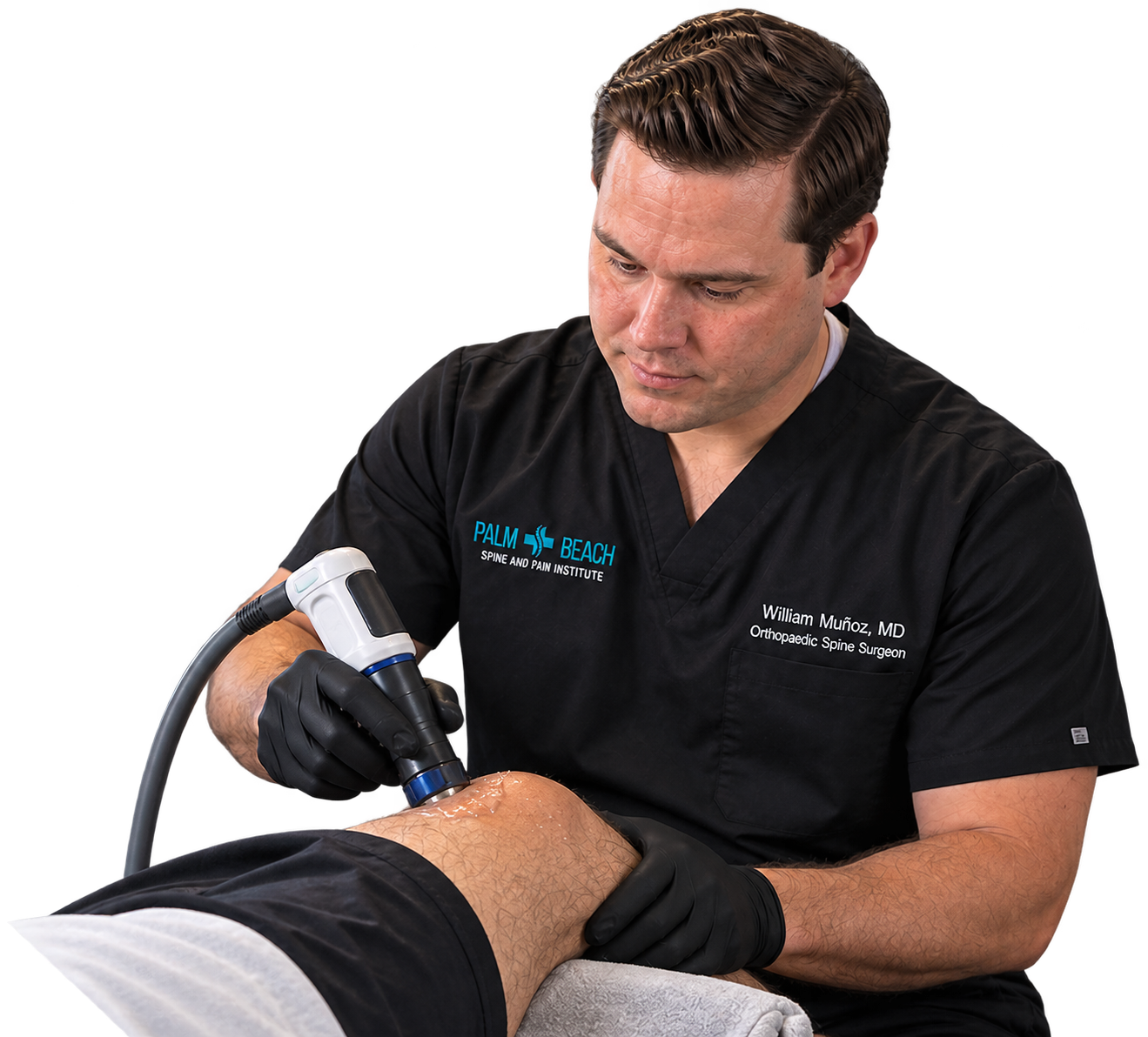
Shockwave Therapy, also known as Extracorporeal Shockwave Therapy (ESWT), uses acoustic pressure waves delivered through a handheld device placed against the skin.
These waves travel into targeted tissues, creating mechanical stimulation that can influence cellular activity and the body's natural repair processes.
Unlike treatments that primarily focus on temporarily masking pain, Shockwave Therapy is intended to address biological processes associated with tissue healing and recovery.
How Does Shockwave Therapy Work?
When acoustic waves reach the treatment area, they produce mechanical stimulation that may trigger several physiological responses:
- Improved Circulation: Acoustic stimulation may encourage the formation of small blood vessels and support blood flow in treated tissues.
- Tissue Repair: Mechanical signals may activate cellular pathways involved in tissue remodeling and recovery.
- Pain Modulation: Shockwave treatment may influence pain-signaling pathways, potentially reducing discomfort over time.
- Collagen Remodeling: Treatment may support processes involved in collagen production and organization, which are important for tendon and connective tissue health.
Researchers continue to investigate these mechanisms, and the degree of benefit varies depending on the condition being treated.
What Conditions May Benefit From Shockwave Therapy?
Shockwave Therapy has been studied for several musculoskeletal conditions, particularly chronic tendon disorders.
Some commonly treated conditions include:
- Plantar Fasciitis: Persistent heel pain associated with irritation and degeneration of the plantar fascia.
- Tennis Elbow: Chronic tendon pain affecting the outside of the elbow.
- Achilles Tendinopathy: Pain and dysfunction involving the Achilles tendon.
- Calcific Shoulder Tendinopathy: Shoulder pain associated with calcium deposits in the rotator cuff tendons.
- Patellar Tendinopathy: Chronic tendon pain commonly affecting the front of the knee.
Evidence is stronger for certain conditions, such as chronic plantar fasciitis and calcific shoulder tendinopathy, than for others. Not every type of muscle, joint, or nerve pain responds to Shockwave Therapy.
What Happens During a Treatment Session?
Shockwave Therapy is typically performed in an outpatient setting and does not require an incision.
A healthcare provider applies a conductive gel to the treatment area and uses a handheld applicator to deliver controlled acoustic pulses.
Sessions often last approximately 5–20 minutes, depending on the treatment area, device, and clinical protocol.
Patients may experience tapping sensations or mild discomfort during treatment. Temporary soreness, redness, or swelling can occur afterward.
A series of treatments may be recommended, with the number and frequency determined by the patient's condition and response.
How Soon Can Patients Expect Results?
Shockwave Therapy does not always produce immediate pain relief. While some individuals notice improvement after initial sessions, others experience gradual changes over several weeks as the tissues respond to treatment.
Clinical outcomes depend on factors such as the duration of symptoms, severity of the condition, activity levels, and overall health.
Shockwave Therapy is often most useful as part of a comprehensive treatment plan that may include physical therapy, stretching, strengthening exercises, and activity modifications.
Is Shockwave Therapy Right for Everyone?
Although Shockwave Therapy is non-invasive, it is not appropriate for every patient or medical condition.
Certain circumstances, including pregnancy, active infection near the treatment area, some bleeding disorders, and treatment near certain tumors or sensitive structures, may require avoiding or modifying treatment.
A medical evaluation is important to determine whether Shockwave Therapy is appropriate and whether another treatment approach would be more effective.
Expanding Treatment Options at Palm Beach Spine & Pain Institute
The introduction of Shockwave Therapy at Palm Beach Spine & Pain Institute reflects the continued development of non-surgical approaches to managing musculoskeletal pain.
While Shockwave Therapy is not a universal solution for chronic pain, clinical research supports its use for selected conditions, particularly certain persistent tendon disorders.
Understanding how the treatment works, what conditions it may help, and its limitations allows patients to make informed decisions about their care.
As with any medical treatment, an individualized evaluation remains essential to determining the most appropriate approach to pain management and recovery.